

Calibrator
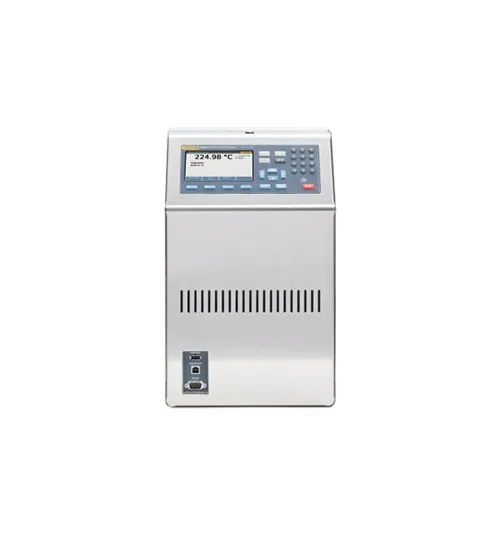
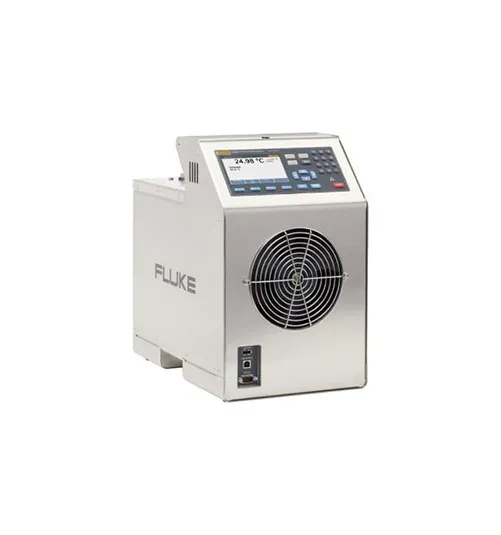
Fluke Calibration 6109A / 7109A Portable Calibration Baths
Key features
• Calibrate up to four tri-clamp sanitary sensors per batch with ± 0.1 °C temperature display accuracy.
• Covers a wide temperature range: 6109A: 35 °C to 250 °C
• 7109A: -25 °C to 140 °C.
• Stainless steel casing that withstands harsh cleaning solutions; it's easy to transport and maintain.
• Calibrate up to four tri-clamp sanitary sensors per batch with ± 0.1 °C temperature display accuracy.
• Covers a wide temperature range: 6109A: 35 °C to 250 °C
• 7109A: -25 °C to 140 °C.
• Stainless steel casing that withstands harsh cleaning solutions; it's easy to transport and maintain.
Download
Product Lainnya
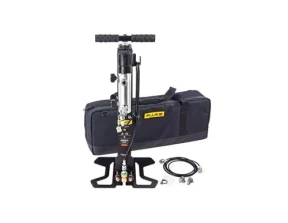
The Fluke Calibration 700HPPK Pneumatic Test Pump Kit generates and adjusts pneumatic pressures up to 21 MPa (3000 psi), without requiring a nitrogen bottle or other external pressure supply. It supplies pressure to devices under test (DUTs) that include transmitters, controllers, pilots, digital and analog gauges, and more. It’s the perfect solution for generating high pressure in the field, where conditions and operating surfaces can vary.
The 700HPPK is the ideal choice for calibration technicians, test engineers, and instrument technicians working in industries like natural gas transmission and distribution, process, aerospace and defense, who need a simple-to-use, safe and portable pressure source that they can depend on in a wide variety of conditions.
The 700HPPK contains both a calibration manifold and high pressure pump to generate and finely adjust pressures. A second model, the 700HPP, is available for people who only prefer a high pressure source.
Use the 700HPPK Test Pump Kits with 2700G Reference Pressure Gauges or 700G Precision Pressure Gauges for a complete pressure calibration solution.
Use the 700HPPK just about anywhere
The 700HPPK is designed to be at home in the lab or the field. Lightweight and portable, it features collapsible feet, built-in handhold, and a canvas carrying case, making it easy to carry to the field.
The 700HPPK works on just about any surface, so you don’t need a flat laboratory bench or flat area in the field.
With the 700HPPK, you don’t need to carry a lot of extra equipment or accessories. No PTFE tape or extra tools are required thanks to a swivel ¼ NPT female reference gauge connector that makes switching reference gauges fast and easy.
The pump kit is designed so that the calibration manifold attaches and detaches easily via quick detent pins. You won’t need to spend a lot of time setting it up or packing it away at the end of the day.
Generate high pressure accurately and safely for a wide workload
The 700HPPK generates pressure up to 21 MPA (3000 psi) within 20 seconds to full scale into a 10 cm3 volume. A detachable pressure adjustment system and adjustment control knob enables users to make fine pressure adjustments to 0.1% of reading or better. The 700HPPK includes a 2 meter (6.5-foot) pressure line and assorted pressure fittings, enabling you to connect a wide variety of DUTs for wide workload coverage. In fact, the 700HPPK covers at least five times more workload than standard range pneumatic pumps. An in-line filter system protects the system against contamination from the unit under test.
Key Features
• Generate and adjust pneumatic pressures up to 21 MPa (3000 psi)
• Rugged, portable and stable enough to go anywhere -- on any surface
• Reaches pressure in 20 seconds to full scale into a 10 cm3 volume
• Detachable pressure adjustment system for adjusting pressure, connecting reference and test devices on bench and in the field, and isolating and venting pressure
• Easily switch out reference gauges without requiring PTFE tape or tools
• 2-meter (6.5-foot) pressure line and assorted pressure fittings enable a wide variety of possible connections
• In-line filter and desiccant systems protect device from contamination from the DUT
The 700HPPK is the ideal choice for calibration technicians, test engineers, and instrument technicians working in industries like natural gas transmission and distribution, process, aerospace and defense, who need a simple-to-use, safe and portable pressure source that they can depend on in a wide variety of conditions.
The 700HPPK contains both a calibration manifold and high pressure pump to generate and finely adjust pressures. A second model, the 700HPP, is available for people who only prefer a high pressure source.
Use the 700HPPK Test Pump Kits with 2700G Reference Pressure Gauges or 700G Precision Pressure Gauges for a complete pressure calibration solution.
Use the 700HPPK just about anywhere
The 700HPPK is designed to be at home in the lab or the field. Lightweight and portable, it features collapsible feet, built-in handhold, and a canvas carrying case, making it easy to carry to the field.
The 700HPPK works on just about any surface, so you don’t need a flat laboratory bench or flat area in the field.
With the 700HPPK, you don’t need to carry a lot of extra equipment or accessories. No PTFE tape or extra tools are required thanks to a swivel ¼ NPT female reference gauge connector that makes switching reference gauges fast and easy.
The pump kit is designed so that the calibration manifold attaches and detaches easily via quick detent pins. You won’t need to spend a lot of time setting it up or packing it away at the end of the day.
Generate high pressure accurately and safely for a wide workload
The 700HPPK generates pressure up to 21 MPA (3000 psi) within 20 seconds to full scale into a 10 cm3 volume. A detachable pressure adjustment system and adjustment control knob enables users to make fine pressure adjustments to 0.1% of reading or better. The 700HPPK includes a 2 meter (6.5-foot) pressure line and assorted pressure fittings, enabling you to connect a wide variety of DUTs for wide workload coverage. In fact, the 700HPPK covers at least five times more workload than standard range pneumatic pumps. An in-line filter system protects the system against contamination from the unit under test.
Key Features
• Generate and adjust pneumatic pressures up to 21 MPa (3000 psi)
• Rugged, portable and stable enough to go anywhere -- on any surface
• Reaches pressure in 20 seconds to full scale into a 10 cm3 volume
• Detachable pressure adjustment system for adjusting pressure, connecting reference and test devices on bench and in the field, and isolating and venting pressure
• Easily switch out reference gauges without requiring PTFE tape or tools
• 2-meter (6.5-foot) pressure line and assorted pressure fittings enable a wide variety of possible connections
• In-line filter and desiccant systems protect device from contamination from the DUT
Portable and extremely stable
• World’s smallest portable calibration baths
• Calibrates sensors of any size or shape
• Stability to ±0.015 °C
• Ranges from –30 °C to 200 °C
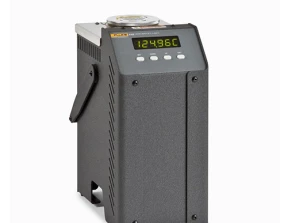
Need portability and extreme stability? Fluke 6102, Fluke 7102, and Fluke 7103 Micro-Baths have both. We invented the Micro-Bath. And, while many have tried to duplicate it, none of them use proprietary Fluke Calibration controllers, so none of them deliver performance like a Fluke Calibration bath. Micro-Baths can be used anywhere for any type of sensor. The 6102 weighs less than 4.5 kg (10 lb.), with the fluid. It’s lighter and smaller than most dry-wells, has a spill-proof lid, and is easier to carry than your lunch. You can take it where you need to go without carts or excessive effort. Micro-Baths can even be transported with the fluid in them.
• World’s smallest portable calibration baths
• Calibrates sensors of any size or shape
• Stability to ±0.015 °C
• Ranges from –30 °C to 200 °C
Need portability and extreme stability? Fluke 6102, Fluke 7102, and Fluke 7103 Micro-Baths have both. We invented the Micro-Bath. And, while many have tried to duplicate it, none of them use proprietary Fluke Calibration controllers, so none of them deliver performance like a Fluke Calibration bath. Micro-Baths can be used anywhere for any type of sensor. The 6102 weighs less than 4.5 kg (10 lb.), with the fluid. It’s lighter and smaller than most dry-wells, has a spill-proof lid, and is easier to carry than your lunch. You can take it where you need to go without carts or excessive effort. Micro-Baths can even be transported with the fluid in them.
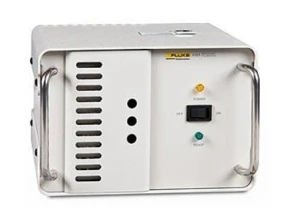
Ice-point reference without the ice
• Bath-quality stability in a portable ice-point reference
• Easy re-calibration for long-term reliability
• Ready-light frees user’s time and attention
• Solid-state cooling technology
Have you been thinking about buying a zero-point dry-well? Forget those ugly-looking units the competition makes. You can get a great looking and great performing zero-point dry-well from Fluke Calibration.
The 9101 has three test wells for inserting more than one probe at a time. All three wells are stable to ±0.005 °C. One well accommodates changeable inserts for varying probe diameters.
• Bath-quality stability in a portable ice-point reference
• Easy re-calibration for long-term reliability
• Ready-light frees user’s time and attention
• Solid-state cooling technology
Have you been thinking about buying a zero-point dry-well? Forget those ugly-looking units the competition makes. You can get a great looking and great performing zero-point dry-well from Fluke Calibration.
The 9101 has three test wells for inserting more than one probe at a time. All three wells are stable to ±0.005 °C. One well accommodates changeable inserts for varying probe diameters.
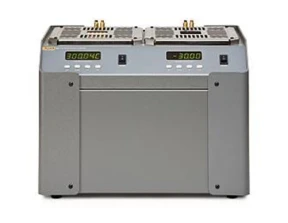
Widest temperature range available in a single dry-well
• Combined range from –30 °C to 670 °C, one unit – two blocks
• Two independent temperature controllers (hot and cold side)
• Stability to ±0.02 °C
• Multi-hole wells for calibrating up to eight probes simultaneously
To give you the widest temperature range available in a dry-well calibrator, we’ve combined two of our most popular units. The 9011 allows temperature probes to be calibrated from –30 °C to 670 °C in a single unit.
• Combined range from –30 °C to 670 °C, one unit – two blocks
• Two independent temperature controllers (hot and cold side)
• Stability to ±0.02 °C
• Multi-hole wells for calibrating up to eight probes simultaneously
To give you the widest temperature range available in a dry-well calibrator, we’ve combined two of our most popular units. The 9011 allows temperature probes to be calibrated from –30 °C to 670 °C in a single unit.